Why Many Business Websites Underperform Even When They Look Fine
The website exists, but it does not clearly explain the service, target audience, or next step, so visitors leave without enough confidence to reach out.
Pages are too thin to compete in search, too generic to build trust, and too slow to support a good experience on mobile devices.
The design feels acceptable, but the site behaves like a brochure instead of a working sales asset that supports marketing, SEO, and lead generation.
Traffic may arrive from Google or paid ads, but the page does not match intent well enough to convert that attention into meaningful inquiries.
The business has grown, but the website still reflects an older version of the company, weaker positioning, or a smaller level of capability than what is true today.
A strong website should support demand generation, authority, and conversion all at once. That means the build has to respect structure, messaging, performance, and user intent from the start rather than trying to fix those things after launch.
What We Build and Why It Matters
Every business does not need the same website. Some need local lead generation. Some need a stronger B2B credibility layer. Some need a scalable content and landing page system. We design around the business model, not a template.
How We Approach Website Development
Discovery and Growth Context
We define what the website needs to achieve, who it needs to persuade, and where it fits into the larger marketing and sales system.
Architecture and Messaging
We build the page structure, content hierarchy, and service narrative so the website can rank better and convert with less friction.
Design and Development
We create a premium interface and implement it with performance-aware development choices that support mobile usability and future scale.
Launch and Improvement Readiness
We prepare the site for SEO, analytics, landing page growth, and future conversion optimization rather than treating launch as the end of the work.
What Strong Website Performance Actually Looks Like
The site is easy to understand quickly, with a headline, layout, and service structure that reduce confusion instead of adding it.
The pages are deep enough to support search intent, AI extractability, and sales questions without becoming bloated or repetitive.
The experience is strong on mobile, where a large share of local and paid traffic first interacts with the brand.
The website supports future digital marketing by giving campaigns, blogs, service pages, and internal links a better strategic foundation.
The business can integrate the site with CRM, analytics, or automation so leads move more cleanly into the next operational step.
When a Website Starts Acting Like a Revenue Asset
Before
A business has an outdated site that gets some traffic but does not clearly present capabilities, lacks search depth, loads poorly, and gives prospects very little confidence in the next step.
After
The new website clarifies positioning, improves mobile experience, supports SEO, aligns better with campaign intent, and gives the business a stronger foundation for lead generation and authority building.
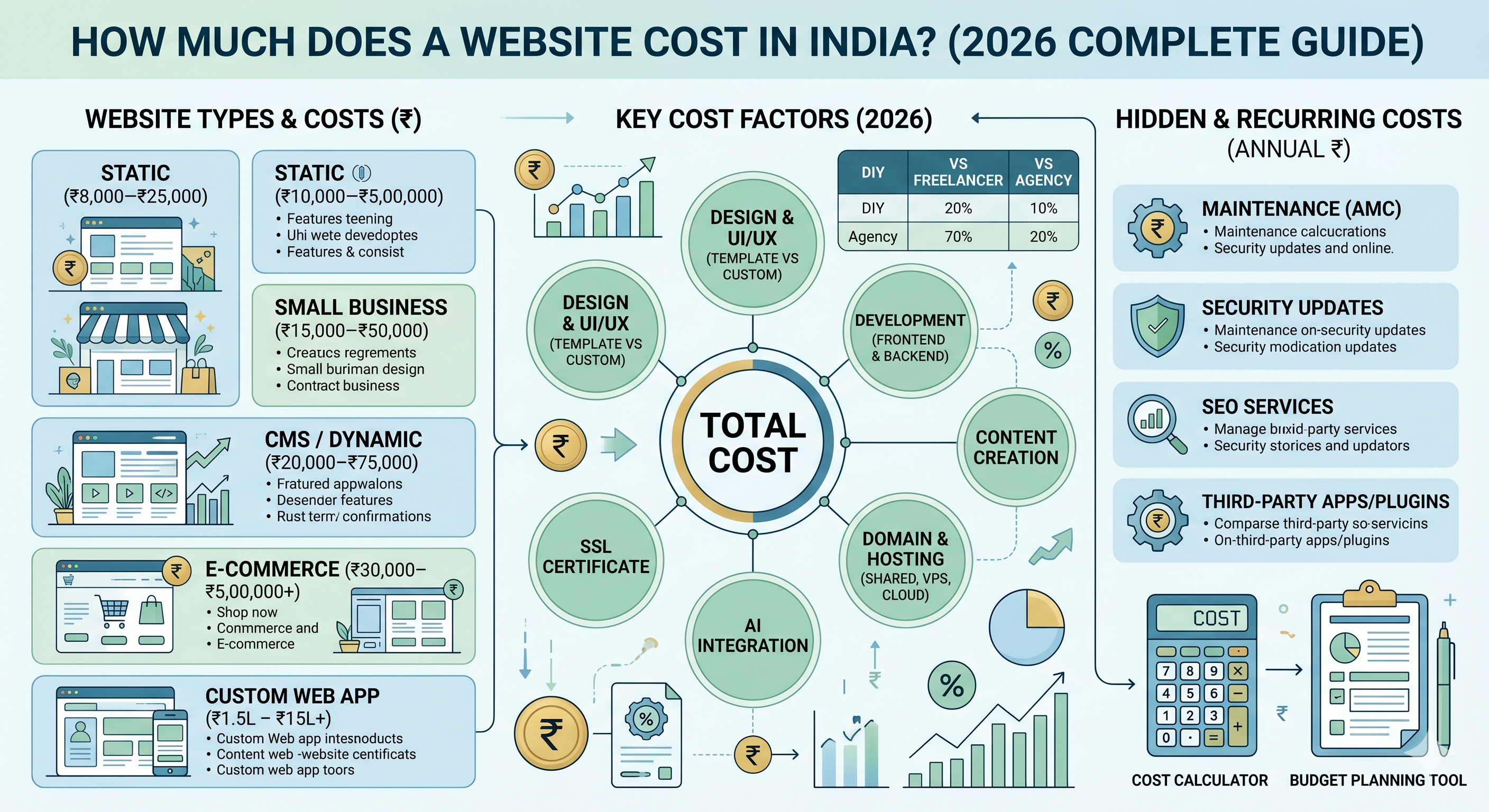
What Affects Website Project Scope
Number of pages, content depth, service complexity, language requirements, and supporting SEO or blog structure.
Custom interface quality, motion, forms, CMS needs, integrations, user flows, and whether the site includes advanced modules.
Analytics, CRM integration, landing page plans, local SEO considerations, and future expansion into campaigns or automation.